Eating During Labor? What the Research Actually Says
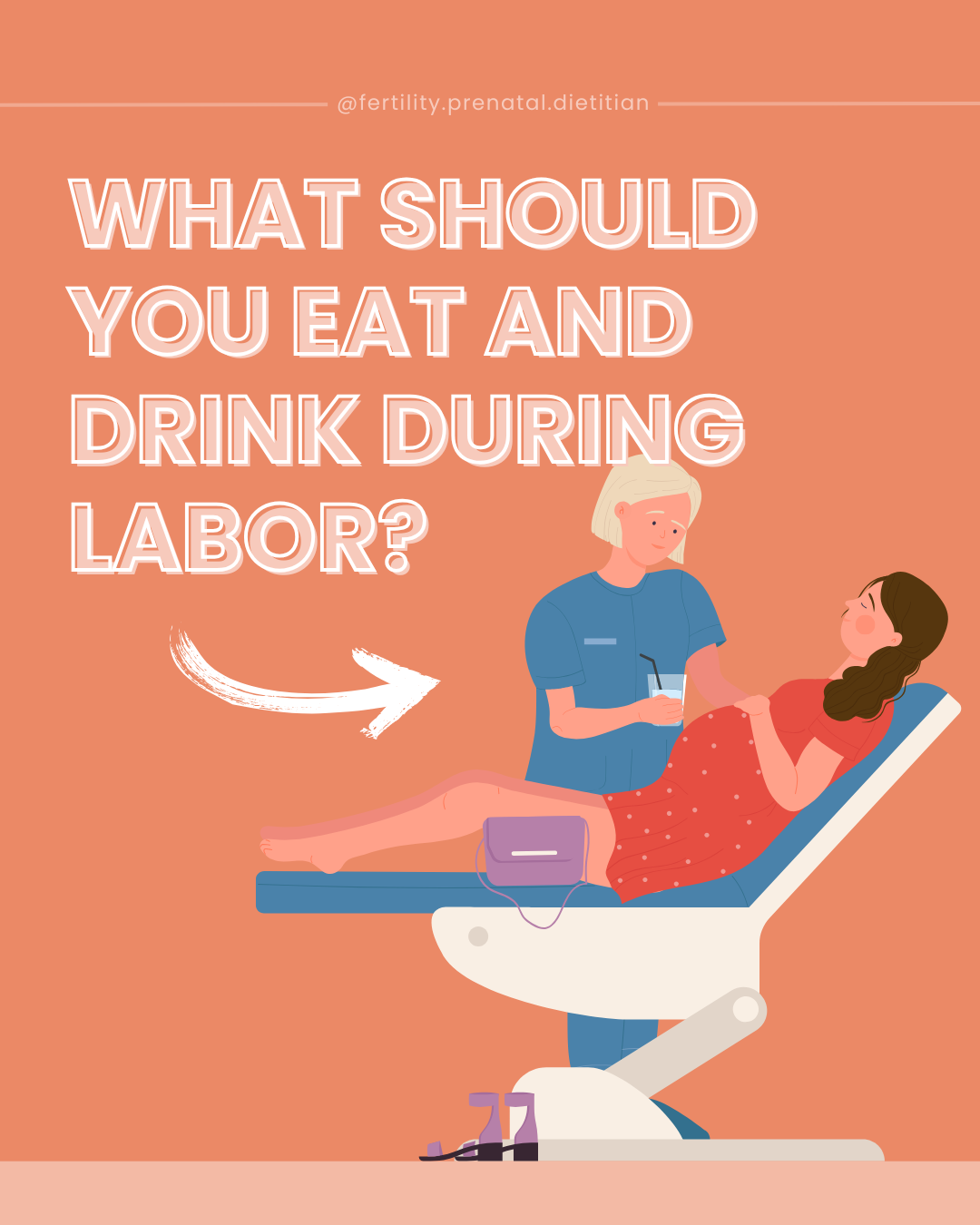
Have you ever wondered why some hospitals tell people in labor not to eat?
Or maybe you’ve been there — hungry, exhausted, and told to stick to ice chips.
Well, long story short: those policies are very outdated.
We’re talking 1940s outdated.
Why Hospitals Started Restricting Food
Before the advances of modern medicine, people giving birth faced a real risk of aspiration (inhaling stomach contents into the lungs ) during emergency C-sections. To minimize that danger, hospitals started a blanket rule: no eating during labor.
But here’s the thing:
Aspiration risk in uncomplicated labor is about 1 in 1,000,000.
“There is no evidence to support restriction of oral intake during labor.” — National Library of Medicine, 2021
What We Know Now
Modern research has shown that eating and drinking during labor is safe for most low-risk individuals.
In fact, the World Health Organization (WHO) encourages people in uncomplicated labor to eat light, easily digestible foods and maintain energy throughout the process to support endurance and comfort during birth.
So why are so many hospitals still enforcing fasting policies?
Simply put, policies haven’t caught up with the evidence.
Fueling for the Work of Labor
It’s called labor for a reason. Your body is working really hard!
Here’s where your energy is going:
Uterine contractions: Every contraction takes energy for your muscles to tighten and release.
Breathing & heart rate: These increase to deliver oxygen and nutrients where your body needs them.
Pushing: During the second stage of labor, your abdominal and pelvic muscles engage as if you’re doing an intense workout.
Hormonal changes: Hormones surge, temperature rises, and metabolism ramps up to keep the process going.
All of this requires energy.
That’s why staying nourished and hydrated while in labor helps your body keep up the effort and may even improve stamina and recovery.
How Much Energy Are You Using?
While studies are limited, one recent study estimated:
For a labor that lasts approximately 10.6 hours, you are expending 90 calories per hour. That is like doing a steady workout for 10 hours straight – no wonder your body needs fuel!
When, What, and How to Eat
Interestingly, research shows that many women naturally eat and drink less as labor progresses. Appetite often decreases as contractions intensify. So, the early phase of labor may be the best time to eat something.
Examples of labor-friendly foods
Yogurt or smoothies
Fruit or applesauce pouches
Peanut butter crackers or toast
Oatmeal
Broth-based soups
Hydrating drinks with electrolytes
But remember, there’s no single “right” food for labor. Cultural and personal food preferences matter just as much.
Eat what feels good, what you enjoy, and what makes you feel strong.
Your culture and your cravings both deserve space in your birth experience.
If you’re unsure what to pack, a registered dietitian can help you plan your “labor snack bag” —
with foods that fit your traditions, preferences, and nutrition needs.
A Few Important Notes
If you’re labeled as high-risk or planning a scheduled C-section, talk to your doctor or midwife first about eating before you deliver.
Policies differ! Check your hospital’s current policy ahead of time so you know your options.
Remember: you know your body best. You should be part of the decision-making.
The Bottom Line?
Hospital fasting rules during labor come from a time when childbirth looked very different.
Today’s evidence says: for most healthy, low-risk pregnancies, it’s safe and beneficial to eat and drink during labor.
Your body needs energy for one of the most physically demanding events of your life.
Fuel it with foods that comfort, energize, and feel right to you.
Want more support figuring out what eating during labor will look like for you? Talk to one of our dietitians today!
For a deeper dive into the evidence, visit: Evidence-Based Birth: Eating and Drinking During Labor