The Hidden Link Between Hypermobility, Reproductive Health, and Digestion
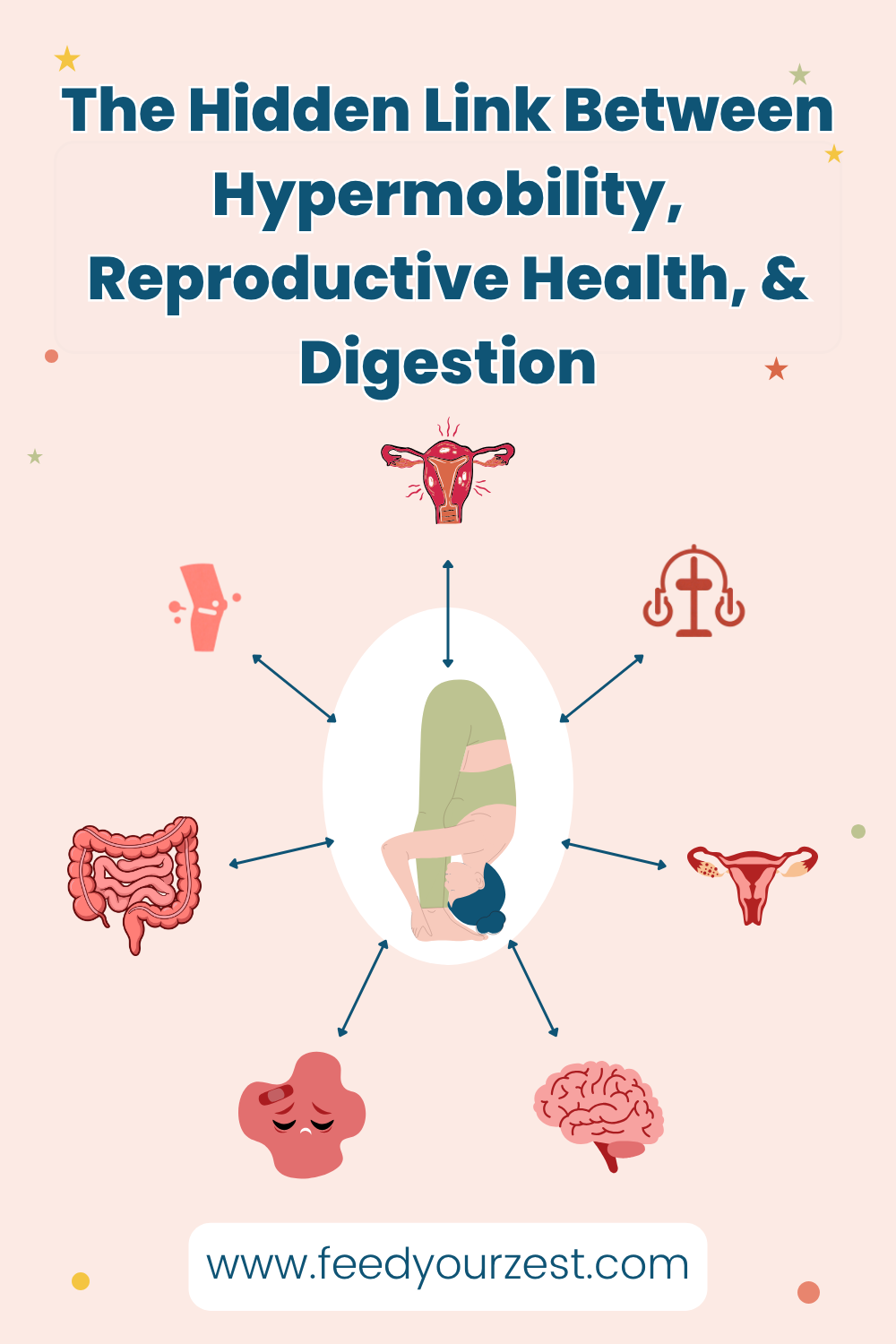
Ever wonder why you may have hypermobility disorder, menstrual irregularities, or difficulties with fertility, and GI problems?
If you’ve ever felt like your joint pain, digestive symptoms, and reproductive health issues couldn’t possibly be connected, you’re not alone. While people have long reported co-occurring conditions, researchers are beginning to uncover shared pathways involving connective tissue, hormones, inflammation, and the immune system that may help explain why these conditions frequently overlap.
Reproductive conditions, like endometriosis, PMOS/PCOS, and PMDD, share similar mechanisms to Hypermobility Spectrum Disorder (HSD) and Hypermobility Ehlers-Danlos Syndrome (hEDS) and are all associated with altered hormone signaling, chronic inflammation, and immune dysfunction.
Researchers believe hormonal changes, inflammation, and differences in connective tissue may interact to worsen symptoms, although the exact relationship is still being studied. Connective tissue is found not only in our joints, but in our skin, blood vessels, pelvic organs, and the digestive tract. When connective tissue is more elastic than normal or acts differently than expected, it can affect many body systems at once.
For that reason, studies have found that hypermobility appears to be more common among people with endometriosis than in the general population, particularly in those with more severe disease, although results vary between studies. Emerging research and patient anecdotal experiences also suggest an association between hypermobility and PCOS, although the evidence is more limited than it is for endometriosis. Insulin resistance associated with PMOS/PCOS may cause low-grade chronic inflammation and altered hormone signaling. Although it is understudied, many women also report an overlap between EDS, or hypermobility, and PMDD. They are both influenced by hormonal changes and have similar symptoms, such as chronic pain, fatigue, and autonomic dysfunction.
The good news: nutrition can support healthy hormone function, reduce inflammation, improve metabolic health, and help manage symptoms associated with conditions like PCOS, endometriosis, and hypermobility.
Before we can understand how nutrition affects hormones, let’s first look at how hormones affect hypermobility.
Estrogen and progesterone, the primary female hormones, are responsible not only for regulating reproductive health and the menstrual cycle but also for influencing connective tissue and joint stability. People with hypermobility may be more sensitive to changes in hormones because their joints are already more lax, leading to increased chronic pain. Estrogen and progesterone levels, as well as some other hormones, vary during the menstrual cycle and different life stages, including pregnancy, perimenopause, and different ages.
Many people with hypermobility report worsening joint pain, instability, or fatigue during certain phases of the menstrual cycle, particularly before menstruation (luteal phase), although researchers are still working to understand the underlying mechanisms. Both hormones, like progesterone and relaxin, increase, which loosen joints and muscles. Estrogen, on the other hand, is linked to collagen stability and preserving muscle mass, so a drop in the hormone leads to decreased joint stability.
During pregnancy, progesterone and relaxin levels increase. Progesterone is associated with increasing laxity of ligaments and joints. Relaxin directly relaxes joints and muscles, leading to increased problems related to hypermobility.
During perimenopause, there is a meaningful drop in estrogen, leading to decreased joint stability. Understanding how hormonal changes influence your symptoms may help you anticipate flares and work with your healthcare team on strategies to better manage them.
So, how are reproductive conditions linked to GI difficulties?
Connective tissue helps support the gastrointestinal tract. When connective tissue is more elastic than normal or functions differently than expected, it may contribute to changes in how the digestive tract functions. Those with hypermobility are more likely to experience constipation, diarrhea, and irritable bowel syndrome. Constipation can be caused by altered motility (muscle contractions that move food), connective tissue laxity (loose joints), and weak sphincters (muscular control valves to help food move through the GI tract), making it difficult to coordinate food through the gut properly. Slow transit time may cause a buildup of stool in the colon, causing constipation, a sluggish or slow feeling, bloating, pain, or even overflow diarrhea. Some people find that certain foods, like histamine-rich foods, can trigger symptoms, although triggers vary from person to person.
While researchers don't yet know exactly why these conditions overlap, abnormalities in connective tissue may help explain why hypermobility can affect joints, the digestive system, pelvic organs, blood vessels, and other tissues throughout the body. The good news is that diet and lifestyle can make significant improvements to symptom management.
Diet plays an important role in regulating hormones.
While nutrition can’t change your connective tissue, it can influence inflammation, blood sugar regulation, gut health, and nutrient status, which all affect the severity of symptoms. Here are some nutrition strategies that may help:
Prioritize adequate protein to support muscle strength
Eat enough fiber and drink enough fluids to reduce constipation
Include omega-3-rich foods to support an anti-inflammatory eating pattern
Correct nutrient deficiencies, such as vitamin D, iron, etc., when present
Work with a dietitian if you have IBS, MCAS, PMOS, or endometriosis, since nutrition strategies differ.
Because every person's symptoms are different, there isn't a one-size-fits-all diet for hypermobility. The best nutrition plan depends on whether you're dealing with constipation, diarrhea, endometriosis, PCOS, POTS, MCAS, or another condition. Working with a registered dietitian can help you identify which strategies are most likely to improve your symptoms while ensuring your diet remains balanced and enjoyable.
Our experienced registered dietitians at Feed Your Zest can help reduce inflammation through diet by personalizing nutrition recommendations that are tailored to your symptoms, goals, and lifestyle. If this feels like something you want to work on, meet with our dietitians 1 to 1 to help create balanced meals with foods that you enjoy eating that meet your tastes, lifestyle, and nutrition goals. Want weekly meal ideas that meet your individual needs? All clients have the option of adding on meal planning support by purchasing a package as well. Get started with nutrition counseling at Feed Your Zest here.