Should I log my food?
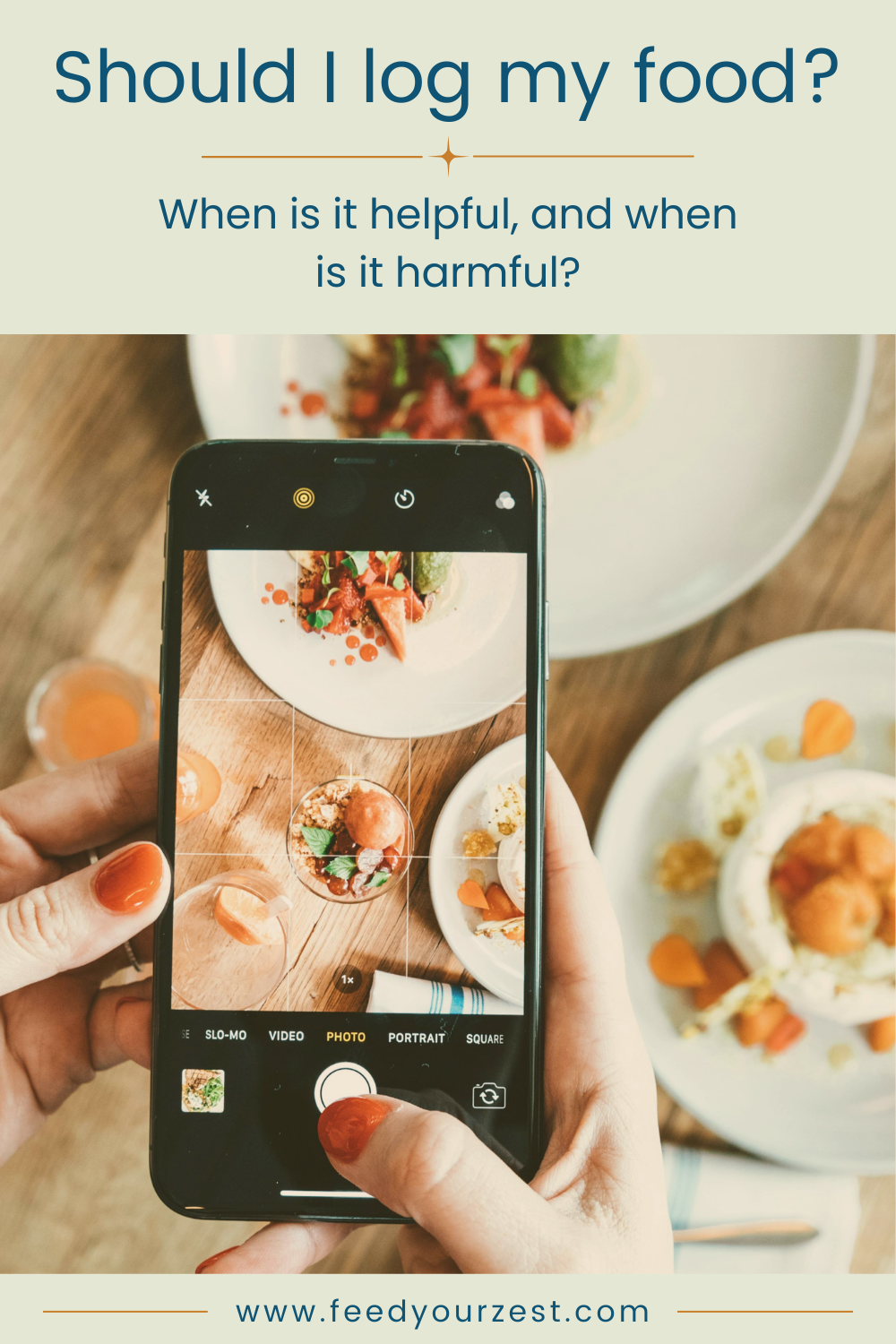
The question of whether to track food intake with an app or journal comes up often with clients in nutrition work. The push to track and gather health data nowadays is ubiquitous. Some health and wellness communities promote the idea that the more data one has collected, the more able they are to achieve improved health and wellbeing. When it comes to nutrition, in addition to the actual foods consumed, people might track data including calories, macronutrients, micronutrients, water intake, steps, blood sugar, and more. In reality, unless you have a medical diagnosis like diabetes that does require a certain amount of blood glucose monitoring, closely tracking health information is an option, never a requirement. On top of this, it’s really important to consider whether tracking your health data is helpful, or potentially harmful to your overall wellbeing.
While tracking can provide some useful insight into eating patterns and symptom trends when used short term, how one tracks this information and how their relationship with foods shifts or not while doing this is the bigger question. Tracking intake and nutrition data can easily transition from a practice born of curiosity to one of control. Keeping tabs on calories burned and consumed, for example, can begin to dictate food choices and eating behavior. Rather than just logging what is happening to understand patterns, people might in fact eat in a way that relies on apps and numbers to tell them what to do—eat, or not eat. Like most topics when it comes to health and nutrition, whether what you are doing is supportive or harmful is very situational and unique to you.
Below are the questions I like to ask clients as we discuss the pros and cons of tracking intake and nutrition data:
What are you getting from the tracking?
Why did you start tracking your intake or health metrics in the first place? Were you pressured to do so because everyone around you or people online are doing it?
Do you feel more at ease eating when you track, or perhaps more anxious? If so, why do you think that is?
Often, tracking starts as a trend, or perhaps as a new year’s resolution to change your body. Maybe you found a free app through an online influencer, or maybe you were simply curious to know what you were eating in a given day or week. It’s important to question something we are doing daily like this, and whether it is decreasing or increasing feelings of stress and anxiety around food. If you have a health condition like diabetes, IBS, or an eating disorder, this may feel different for you, as tracking with the support of a medical professional may be an approach to track symptoms or to ensure that what you’re eating is appropriate and safe.
Furthermore, it’s possible to track your food, feelings, hunger/fullness, and symptoms without counting calories or tightly controlling your macros. We often have our patients track a few days of eating to work on building a mindful relationship with their food without feeling like they have to count every gram of carb or protein on their plate.
How is it impacting your behavior?
This is where it helps to be brutally honest with yourself.
Are you avoiding eating out with friends because it’s too hard to log restaurant meals?
Are you eating to stay within a particular window of caloric intake?
Often, many apps push you to clarify how much weight you want to lose (a common assumption of tracking apps) and ask for your basic data like height and weight, then spit out a calculated calorie range—and these are notoriously low caloric ranges for adult human beings. A good question to consider is: how do you make food choices when you have reached the caloric (or carbohydrate, fat, etc.) maximum number as specified by the app, but still feel hungry? Problems can arise when food choices become completely outsourced to an app like this and become centered in the brain rather than in the body. This is why we like to offer more flexible alternatives to calorie or macro tracking apps. Embodied food choices are part of the aim of intuitive eating, and when we make logical decisions based on numbers, we are very likely ignoring our bodies hunger and fullness cues, or at least confusing them as we try to mentally reason through our decisions.
How does it feel to consider NOT tracking?
When you think about not tracking a single thing you eat over the course of the day, how does that make you feel?
Does it bring up any feelings of anxiety, or loss of control?
If getting less data or not tracking, and eating based on sensation/desire/physical cues brings up uncomfortable feelings, this is a red flag and is worth exploring. This may be especially uncomfortable if transitioning away from a routine of tracking. If alternatively, you feel fine, like you aren’t missing anything, then this likely indicates a healthier more neutral relationship with tracking.
If not tracking, then what? How do I know what changes to make, or what goals to set?
As mentioned above, it’s also possible to keep a flexible food journal that’s focused more on how you feel and the achievable goals you’ve set with your dietitian than closely monitoring your calories or macros, or tightly controlling your food intake. Folks with diabetes can also use this to keep track of how their blood sugar responds to food, sleep, illness, hydration, and more. As part of our meal planning package, we offer optional weekly food log reviews where we can provide feedback and encouragement to help you achieve your goals.
Alternatively, many of our clients decide that tracking is actually not right for them at all. Instead, in consultation with your dietitian, you might do something called a 24-hour recall where you describe everything you had to eat or drink for a full 24 hours, often focusing on the day before your session. This can give your dietitian an idea of how a typical day in your life looks with respect to food and beverage intake and movement. You might also simply have a conversation with your dietitian about eating lately, challenges you are having, and questions that have come up for you. From there they can help you to establish reasonable goals and sustainable ways of achieving them over time.
Ultimately, tracking daily intake and nutrition data is not a requirement to being a person actively engaged in their health.
Depending on how that tracking is done, and your personal relationship with food, closely tracking your calories or macros can actually have some very harmful side-effects long term on your relationship with food or exercise. This can feel counter to the ways in which using apps and wearable devices are touted as the answer to achieving health in the modern era. However, being a human and eating food is nuanced, and this is why discussing your life and eating patterns with a dietitian can be so supportive rather than outsourcing food decisions to an algorithm.
If you are already regularly tracking and are wondering if this is right for you, or are looking for support in interpreting the data you are receiving, we’d love to support you! The dietitians here at Feed Your Zest are specialized in reproductive health and intuitive eating - meaning we want to help you improve your hormonal symptoms, fertility, and pregnancy or postpartum health while maintaining a healthy relationship with food.
Learn more about working with us 1:1 here, including our optional meal planning packages to get structure and ideas for nutritious eating without rigid rules.