PCOS to PMOS - what does this name change mean for you?
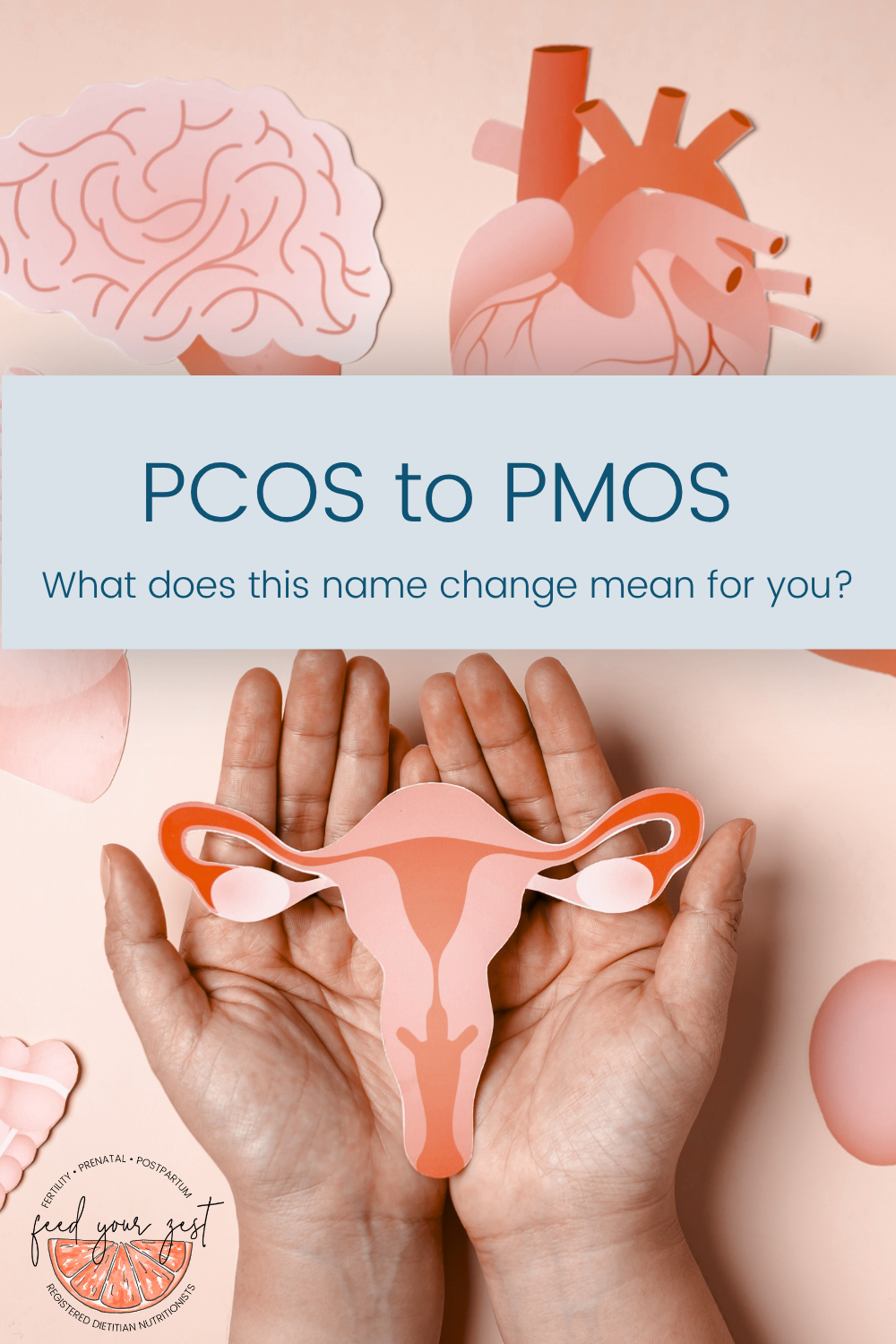
Goodbye PCOS, hello PMOS!
As you may or may not know, the name of Polycystic Ovary Syndrome (PCOS) was changed to Polyendocrine Metabolic Ovarian Syndrome (PMOS) on May 12th, 2026. You may be thinking, “Does changing one letter really make any difference?”
We say to this…YES!
Here is some background for you:
After much deliberation and conversation over many years, the name of Polycystic Ovary Syndrome has been changed to Polyendocrine Metabolic Ovarian Syndrome. Let’s break down the new name.
Polyendocrine: Multiple endocrine systems.
Metabolic: Pertaining to energy production and nutrient utilization.
Ovarian: Relating to the ovaries.
Syndrome: Characterizing a condition.
The definition of PCOS/PMOS and conditions for diagnosis have stayed the same, even though the name has changed. To get a diagnosis of PCOS/PMOS, you have to meet 2 of the 3 following criteria, known as the Rotterdam Criteria:
Signs and/or symptoms of hyperandrogenism. These include but are not limited to acne, hirsutism (facial hair), alopecia (hair loss), and abnormal androgen lab values (such as testosterone and DHEA Sulfate).
Irregular or absent periods.
Polycystic ovaries. Often described as a “string of pearls” on an ultrasound. These will be explained more below!
Why change the name?
Basically, PCOS is an inaccurate name.
First, the term “Polycystic Ovary” is a bit of a misnomer. When someone has PCOS/PMOS, the cysts this definition refers to are actually premature follicles in the ovaries that never fully develop. These premature follicles are a result from a lack of ovulation due to high amounts of reproductive hormones, as seen through irregular or absent periods. These are not the painful ovarian cysts that many may presume when they hear the term Polycyctic Ovarian Syndrome. Correcting this misinformation is one reason for changing the name of PCOS to PMOS.
Second, the former name, PCOS, misaligned the disease with the main symptom of polycystic ovaries, even though you can receive a PCOS/PMOS diagnosis without having them at all (as you can see in the criteria above!). Previously, receiving a diagnosis of PCOS for someone who meets criteria 1 and 2 may have been misleading and confusing due to this name. In addition to having polycystic ovaries, someone with PCOS/PMOS can have endocrine, metabolic, reproductive, psychological, and dermatological symptoms. Because of this wide array of symptoms, the name change helps to encompass the whole body effect of PCOS/PMOS.
Does this name change affect my treatment?
Now that you know the background for why the name for PCOS has changed, here is how it might affect you. If you already have a PCOS/PMOS diagnosis, your treatment will probably stay the same. Comprehensive lifestyle and medical treatment are still recommended for treatment of PCOS/PMOS symptoms. Not much will be different for you in this regard.
Then why change it at all?
At a societal scale, this name change is a huge win for women’s health. Having the name of PMOS will help diagnose new cases, promote advocacy, and spread awareness of PCOS/PMOS as a whole body syndrome. According to the WHO, 70% of women worldwide with PCOS/PMOS are unaware that they have it. Additionally PCOS/PMOS is the leading cause of infertility globally. Challenging the stigma and misinformation surrounding PCOS/PMOS through name change will help to improve its understanding for patients and providers. Overall, we feel that the name change of PCOS to PMOS is a great step in the right direction for better advocacy and treatment for folks with this condition, but there is definitely a long road ahead. We’re hopeful that better research funding and provider awareness will follow this name change, and help more people with PCOS/PMOS get the whole-person treatment they need.
You don’t have to navigate PCOS/PMOS alone.
Want evidence-based support for PCOS/PMOS? Our team of specialized dietitians would love to work with you. Learn more about working with us 1:1 and get started here.
Links:
https://www.thelancet.com/journals/lancet/article/PIIS0140-6736(26)00717-8/fulltext
https://www.who.int/news-room/fact-sheets/detail/polycystic-ovary-syndrome
https://19thnews.org/2026/05/pcos-polycystic-ovary-syndrome-renamed-pmos/