Do you need a probiotic?
You’ve probably heard an influencer talking about “gut health” or seen an ad for probiotic supplements promising to improve your health and reduce a wide variety of symptoms. But, do YOU really need one? Let’s break it down!
What is a probiotic?
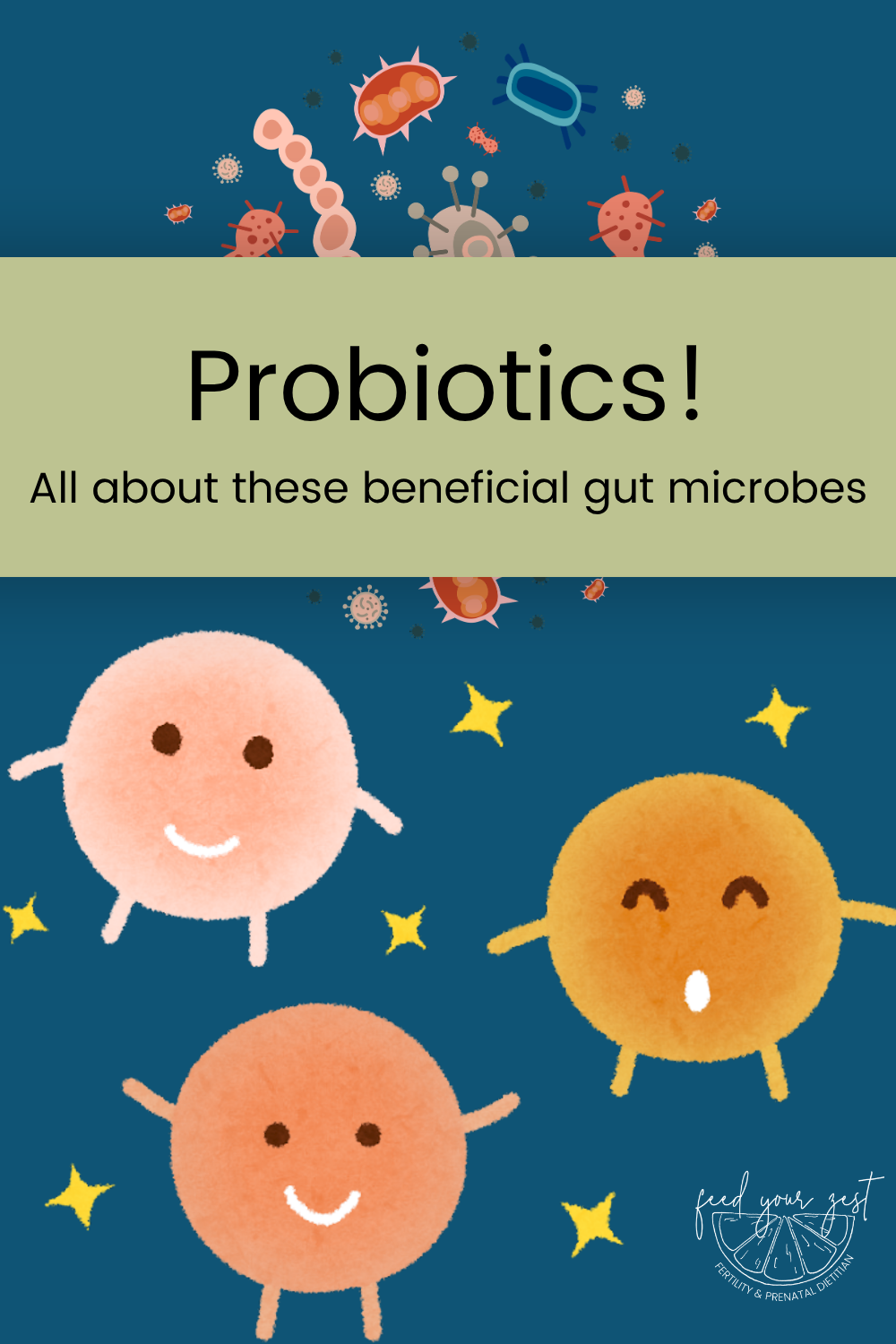
Probiotics are live microbial organisms that benefit the body. Don’t be scared by the idea of bacteria; these are beneficial species that are here to help. Some examples of their roles include: inhibiting "bad" bacteria growth in the gut, processing fats, synthesizing vitamins, and improving cell immunity in the gut. The benefits of probiotics are case-specific, meaning that specific species and strains of bacteria have different benefits.
What are sources of probiotics?
Food and supplements are the 2 biggest sources of probiotics. Food sources are fermented foods, such as kimchi, kombucha, sauerkraut, yogurt, and kefir. Pickles can also be sources of probiotics, but the specific kind of pickle is lacto-fermented (not brined in vinegar). Dietary supplements include capsules, tablets, powders, and gummies. Additionally, there is growing research with probiotic vaginal suppositories for bacterial vaginosis and other vaginal conditions, but their use should always be cleared by your OBGYN or midwife. Talk with a registered dietitian to see what probiotic would work best for you!
What is a prebiotic?
In order for probiotics to work in the gut, you have to feed them. Fiber is a prebiotic, which means that it feeds your gut bacteria. Feeding the bacteria in your gut helps balance the good bacteria versus the bad bacteria, and this impacts your gut’s microbiome. Fiber sources are oats, chia, flax seed, avocado, whole grains, beans, nuts, fruits, and vegetables.
3 tips to add more prebiotics and probiotics to your diet:
Try using Greek yogurt in recipes that call for mayonnaise or sour cream
It tastes very similar to sour cream. I have personally had great results replacing mayo or sour cream with Greek yogurt.
Explore different cuisines and cultural foods
Many different cultures have unique fermented, probiotic-rich foods that can add flavor and excitement to your meals. Examples of these include
Miso (a japanese fermented soybean paste)
Kimchi (a korean spicy lacto-fermented vegetable, typically cabbage or radish)
Sauerkraut (a german lacto-fermented cabbage)
Torshi shoor (Persian lacto-fermented vegetables)
Tepache (a mexican probiotic drink made from pineapple rind and core)
Kanji (a northern indian probiotic drink made from beetroot/carrot and mustard seed)
Kvass (an eastern european probiotic drink made from rye bread)
Feed your gut bacteria by including prebiotics, like beans, fruits, and vegetables in your meals
Eat the edible peels of fruits and vegetables for added fiber, too! If your body is not used to eating fiber, it is important to start slowly. Eating too much fiber at once can make your stomach hurt if you aren't used to it, and ensure you’re drinking adequate water too so you don’t “clog the pipes” on accident. Different types of fiber work for different people, so if you have difficulty increasing your fiber or think you may need a supplement, consider working with a dietitian to get 1:1 support.
Do you need a probiotic supplement?
Short answer- probably not. Generally, most people get enough probiotics through their diet alone. Sometimes, depending on your specific conditions, clinicians will recommend a probiotic supplement to bring in beneficial bacteria into the gut.
Is a probiotic necessary for PCOS/PMOS or endometriosis?
Research suggests probiotics are a promising complementary tool for treating GI-related symptoms of PCOS/PMOS and endometriosis. Elevated inflammation and hyperandrogenism (an increase in androgens in the body) that commonly occur during PCOS/PMOS can affect the gut microbiome. For folks with endometriosis, overall inflammation, and specifically having lesions on you bowels, can dysregulates the bacteria in your gut. Taking a probiotic can increase the good bacteria in your gut, possibly improve inflammation and hormone dysregulation that occur in both PCOS/PMOS and endometriosis. However, if you don’t have digestive symptoms, you may not need to spend the money on a supplement, and could benefit by incorporating some of the strategies listed above instead.
Additionally, if you have any of the conditions listed below in addition to PCOS/PMOS or endometriosis, it might be beneficial to add probiotics to your diet!
Conditions where a probiotic supplement may be necessary:
Irritable Bowl Syndrome
Inflammatory Bowel Disease (Ulcerative Colitis/Crohn’s disease)
Atopic Dermatitis
UTI’s, yeast infections, and other vaginal infections
SIBO
Antibiotic-associated diarrhea
Which probiotic should I take?
Unfortunately, there’s not a straight answer to which probiotic you should take, as research supports different strains of bacteria for different conditions. We strongly recommend choosing a 3rd party tested supplement, regardless!
In our 1:1 nutrition counseling program, gut health is a big part of what we cover with our clients, including assessment of whether you might benefit from a probiotic or not, and if so, what type. Learn more about working with our team of expert dietitians and get started here.
Sources:
https://ods.od.nih.gov/factsheets/Probiotics-HealthProfessional/