How to have a healthy plant-based pregnancy
Contrary to what you might have heard on the internet, it is perfectly okay to continue being plant-based during pregnancy! Typical plant-based/vegan diets are rich in fiber, healthy fats, and antioxidant-rich fruits and vegetables, and vegetarian diets offer additional important nutrients through the inclusion of eggs and dairy. Some folks choose to avoid red meat or poultry, but still consume seafood, which offers omega-3 fatty acids as well.
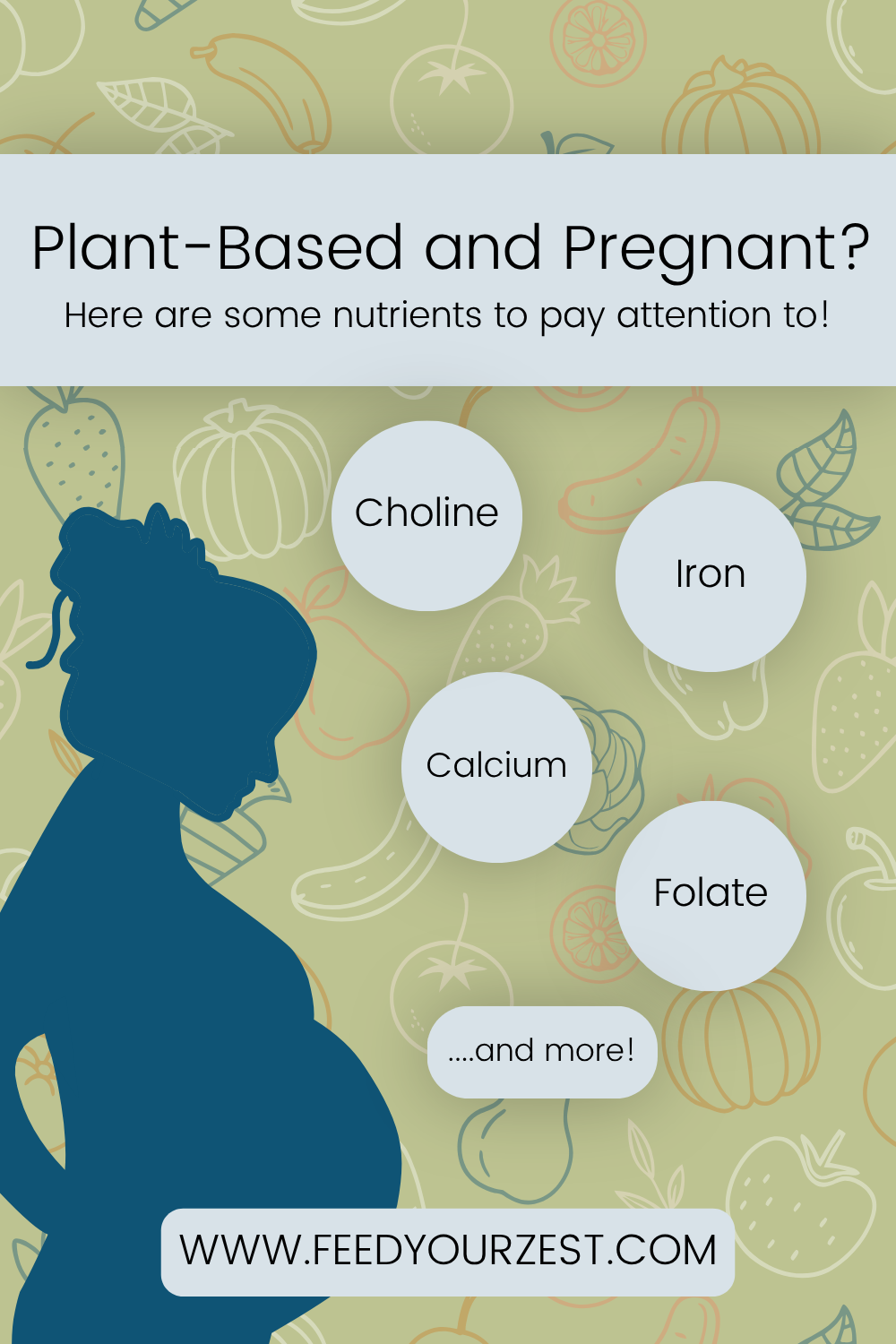
No matter what ethical or religious eating principles you choose to follow, an overall balanced diet is crucial during pregnancy. As a plant-based eater, you have to make sure that you are getting all of the macronutrients and micronutrients you need that may be missing in a diet without animal products. Some micronutrients need special attention during pregnancy, which may call for more supplementation than someone who eats both plant and animal products.
7 important nutrients for a healthy plant-based pregnancy:
Calcium
Calcium is commonly found in dairy products and is important for fetal bone growth. The general recommendation is 1000 mg per day for pregnant and lactating women. Plant-based sources of calcium are leafy greens, tofu, fortified products (fruit juices, non-dairy milks, cereals), almonds, rhubarb, some beans, wakame, and seeds (poppy, chia, sesame). Our favorite recommendations are soy milk and as they’re often great substitutes for real dairy products in common recipes. 2-3 servings per day of soy milk or tofu will help you reach your calcium goals.
Iron
Iron is commonly found in red meat, and certain types of poultry and seafood, and is important for blood oxygenation and circulation. The general recommendation is 27 mg per day for pregnant women. Your needs for iron slowly increase as pregnancy progresses due to fetal development. Severe iron deficiency can be dangerous during pregnancy, as it can increase risk of low birth weight and growth restriction, but even minor deficiencies can lead to fatigue, dizziness, or restless legs. Plant-based sources are not as well absorbed by the body, but eating them with a source of vitamin C can help! Plant-based sources of iron include leafy greens, broccoli, sweet potatoes, green beans, strawberries, raisins and other dried fruits, beans, lentils, seeds and nuts, whole wheat bread, enriched grains, and dark chocolate. Sources of vitamin C include strawberries, citrus fruits, and bell peppers. Certain food compounds like calcium, or drugs like proton pump inhibitors, can decrease iron absorption, so you may need to work with a dietitian to strategize your iron intake, especially if you may need a supplement.
Omega-3 fatty acids
Omega-3 fatty acids are commonly found in fish and are important for heart and brain function and fetal nervous system development. Getting enough omega-3 fatty acids is also important to reduce your risk of preeclampsia and postpartum depression. The general recommendation is 300 mg of DHA (a type of fatty-acid) for pregnant and lactating women daily. The plant-based source of omega-3 fatty acids is algae oil, which is commonly sold as a supplement.
Vitamin D
Vitamin D is important for fetal bone growth and preeclampsia prevention. The general recommendation is greater than 400 IU per day for pregnant and lactating women, but recent research shows that up to 4000 IU per day may be necessary or beneficial. While your body can make vitamin D when your skin is exposed to sunlight, preventing skin cancer by using sunscreen or covering up is important, and folks living in northern states in the US may not get enough sun in the winter. Additional plant-based sources of vitamin D are fortified foods and drinks (non-dairy milk, orange juice, cereal).
Vitamin B12
Vitamin B12 is commonly found in animal meats, fish, and dairy products. It is important for fetal nervous system development and DNA creation. Alongside another B vitamin, folate, vitamin B12 can lessen risk of neural tube defects, like spina bifida. The general recommendation is 2.6 mcg per day for pregnant and lactating women. Plant-based sources of vitamin B12 come from fortified foods. Supplementation of vitamin B12 is necessary for a fully plant-based diet due to the lack of natural sources of Vitamin B12 in plant-based foods. In addition, certain medications like metformin or proton pump inhibitors can decrease your absorption of vitamin B12, so it’s important to be evaluated by a registered dietitian if you are both eating plant-based and taking these types of medications.
Choline
Choline is commonly found in eggs, specifically egg yolks. It is important for fetal neural tube and brain development, as well as liver function and fat metabolism. The general recommendation is 450 mg per day for pregnant women, and this recommendation increases as pregnancy progresses. Plant-based sources of choline are beans, peas, cruciferous vegetables (broccoli, bok choi), potatoes, and shiitake mushrooms. However, these plant-based sources are much lower in choline than eggs, so supplementation is necessary if you do not consume eggs.
Folate
Folate is crucial for preventing neural tube defects. This is one of our nutrient “wins” for plant-based eaters! The general recommendation is 400-800 mcg for pregnant and lactating women, and most sources of folate are naturally plant-based, such as whole or enriched grains, lentils, citrus, spinach, broccoli, asparagus, great northern beans, avocado, and nuts. However, it’s crucial to take a prenatal vitamin with at least 400 mcg of folate to help cover our bases.
Prenatal vitamins and other supplements for plant-based pregnancy
A prenatal vitamin can provide important micronutrients involved in pregnancy regardless of diet status. Choosing a prenatal vitamin can be hard, as there are so many choices to choose from!
For a comprehensive and reliable resource to help guide you through the world of prenatal vitamins, check out our Ultimate Prenatal Vitamin Guide. This helpful resource boosts your understanding of prenatal vitamins, breaks down the nutrients that are important for you and your baby, provides tips and tricks for supplementation, and provides expert guidance for prenatal vitamins. Additionally, the supplements in our vitamin guide are guaranteed to be from reputable sources that are third party tested. Get your instant download of the Ultimate Prenatal Vitamin Guide here.
Summing it up
Proper nutrition and supplementation is important for plant-based folks who are thinking of becoming/are pregnant. It is important to consult with your medical provider before taking nutrition supplements, and this is where a Registered Dietitian at Feed Your Zest can help you make the right choice. In addition to The Ultimate Prenatal Vitamin Guide, we can help you figure out what to eat during pregnancy, what supplements you might need to meet nutrient requirements while vegan or vegetarian, and can give broader recommendations for protein and calorie amounts that increase during pregnancy. Get started with 1:1 coaching today by clicking here!