4 Easy Steps to Build a Balanced Plate When You Don’t Love Cooking
Not everyone loves cooking, and that’s okay. If you’ve ever stood in the grocery store wondering what to purchase or looked in your fridge and had no idea what to make, you’re not alone. The good news is that building a balanced meal does not require chef-level skills. With a few pieces to put together, we can help you create meals that satisfy your taste buds while meeting your nutritional goals to manage conditions like PMOS/PCOS and endometriosis, and improve fertility health. There are plenty of tips and tricks you can use to build a balanced meal when you don’t consider yourself a creative cook.
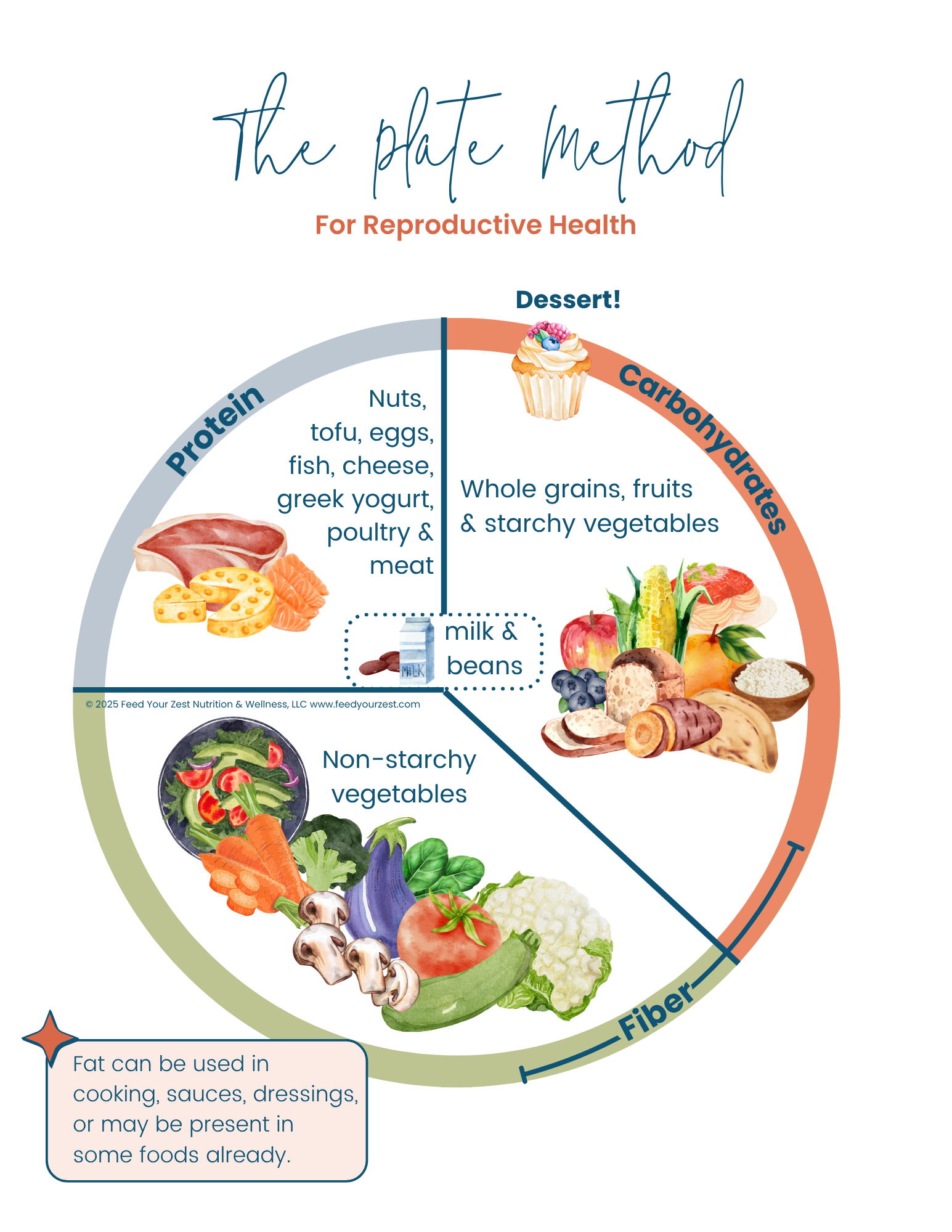
Let’s start with what a balanced meal actually looks like and why having a balanced diet is important. A balanced meal consists of protein, carbohydrates, fruits and vegetables, some healthy fats, and some flavor. An easy visual guide is that the meal should consist of a quarter plate of protein, and the rest should be evenly split between non-starchy vegetables and carbohydrates.
A balanced plate will ensure you get the right proportions of macronutrients for sustained energy between meals. Pairing carbohydrate-rich foods with a protein and fiber slows sugar absorption, leading to steadier energy levels and helps you stay full for longer. Additionally, regularly consuming balanced meals ensures you get a variety of foods and a wide range of vitamins and minerals to give your body what it needs.
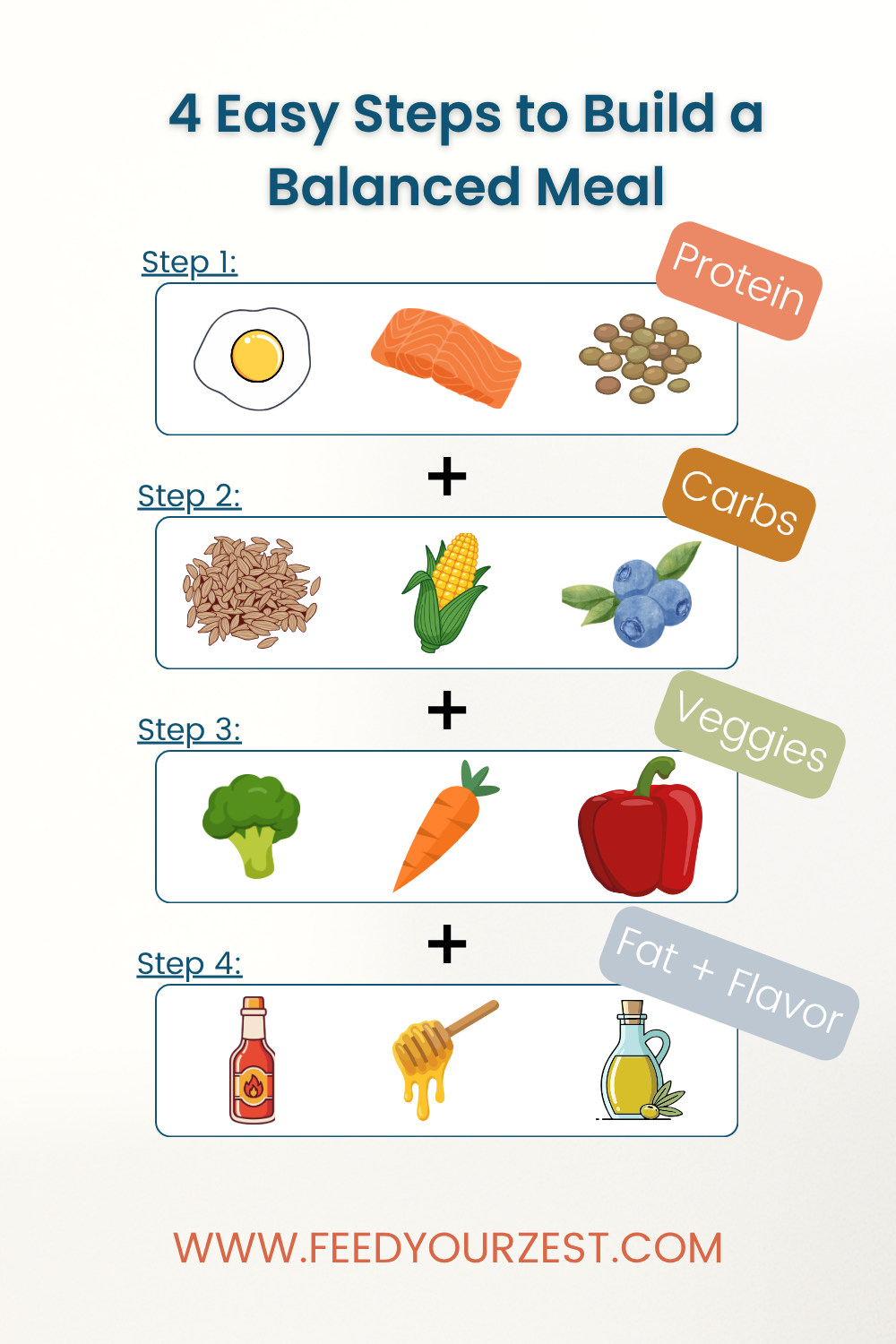
4 Easy Steps to Build a Balanced Plate
Choose a Protein.
First, start with a protein that you enjoy: chicken, fish, tofu, beans, lentils, meat, seafood, cottage cheese, or Greek yogurt. Incorporating a protein in each meal and snack is especially important for people managing conditions like PMOS/PCOS, who are more susceptible to blood sugar spikes that can contribute to hormonal imbalance.
Add a carb.
Second, add a carbohydrate. Carbohydrates provide fuel for your body to promote regular menstruation and ovulation. Choosing a carb that’s higher in fiber will help with digestion, blood sugar balance, hormone regulation, and cholesterol management. Some examples of high fiber carbs include any type of fruit, whole grains, and starchy vegetables. Whole grains include farro, brown rice, quinoa, or oats/ granola. Starchy vegetables include potatoes, sweet potatoes, corn, and winter squashes.
Pick a nonstarchy vegetable.
This includes kale, zucchini, arugula, tomatoes, mushrooms, celery, green beans, and more. Nonstarchy vegetables help keep you full for longer and are nutrient-dense, helping your body combat inflammation and improve hormonal regulation.
Add fat and flavor.
Fourth, think of fats and flavors. Healthy fats like olive oil, avocado, and nuts help regulate your hormones and reproductive cycle. One of the biggest challenges in creating meals you want to eat at home is matching home-cooked flavors to those when you eat out at restaurants. Brainstorm some flavors you like and keep a few ingredients stocked up. Maybe it’s a drizzle of honey and a few chocolate chips to add to a Greek yogurt parfait for some sweetness, tzatziki to add to a lunch bowl for some creamy tanginess, garlic and lemon juice to add to steamed vegetables to bring out the flavors, or a balsamic glaze to put on top of roasted vegetables. Need some guidance on flavors? Try these:
Sweet: honey, cinnamon, maple syrup
Tangy: Lemon juice, balsamic glaze
Savory: garlic, onions, parmesan cheese
Spicy: Chili crisp, hot sauce, sriracha
Fresh: herbs like cilantro, parsley, and basil
You did it! You made a meal. Not too bad, right? Some more ideas to keep you going:
Chicken, roasted sweet potatoes, and cauliflower.
Greek yogurt, granola, and blueberries.
Salmon, quinoa, and broccoli.
Tofu, bok choy, and soba noodles.
Shrimp, yuca, peppers, and onions.
We lovvvee an easy recipe around here, so we also have a few recipes on our blog that can work as a meal or as a side. Practice noticing - what counts as the carb, protein, fiber, fat, or flavor in these recipes?
Lastly, think about the cooking method.
For beginners, microwaving is easiest; we just recommend not putting anything plastic in the microwave to reduce exposure to endocrine-disrupting chemicals. Some other easy cooking methods are roasting, baking, air frying, and sauteing. Remember, it may take some practice to get things right, and that’s okay.
When cooking feels like a challenge, remember that it’s just as nutritious to purchase pre-cut, canned, frozen, or shelf-stable items. If cutting and chopping feel like a challenge for you, opt for things that need less cutting or not cutting. This way, you will easily be able to add or substitute whole food items later when groceries are running low to support your endocrine system.
Some nutrient dense convenient foods we recommend:
Protein: canned tuna, frozen chicken, tofu, canned beans
Carbohydrate: microwave rice, pasta, or quinoa
Non-starchy vegetables: frozen broccoli, spinach, or peas, canned corn or green beans
Fruit: frozen berries or bananas
Flavor: pesto, salsa, hummus, parmesan, hot sauce
The goal is not to make every meal perfect.
It is to create balanced meals that you feel like you can make consistently to create sustainable change to improve your reproductive health.
If this feels like something you want to work on, meet with our dietitians 1 to 1 to help create balanced meals with foods that you enjoy eating that meet your tastes, lifestyle, and nutrition goals. Want weekly meal ideas that meet your individual needs? All clients have the option of adding on meal planning support by purchasing a package as well. Get started with nutrition counseling at Feed Your Zest here.